国内精品一区二区三区最新_不卡一区二区在线_另类重口100页在线播放_精品中文字幕一区在线

Tools: Save | Print | E-mail | Most Read
Inner Mongolian Menu Primer
Adjust font size:

In Hohhot, the capital of Inner Mongolia, the cuisine is as diverse as the population. The city features several outstanding Chinese restaurants, specializing in exotic South China dishes. These fancy eateries are constructed to resemble giant indoor gardens, complete with wild birds, fish and even an occasional alligator or two. There are also dozens of motley fast food joints sprinkled around the city serving both Chinese and Western dishes. And in the various luxury hotels you can find a few expensive Western bistros serving elegant continental cuisines. But people who come to Hohhot invariably say that the distinct Mongolian cuisine is what most appeals to their palates.


The primary purpose for food is nutrition, but it also has a human dimension. Diners choose what they eat not only by flavor or nutritional value but by cultural, religious, economic, status and environmental factors. In Inner Mongolia for centuries the staple traditional diet has been meat, milk and grain, mainly in flour form. This is because Inner Mongolians were pastoral herders, nomads who roamed freely on the vast grasslands, raising sheep, goats, horses, yaks and camels. Only in the last sixty years have they stopped wandering and settled down. Many now farm as well as raise livestock; others have left for jobs in the big cities. Additionally, in the early 1920s a great wave of Han Chinese immigrated to Inner Mongolia, causing culinary as well as economic changes. The Han people introduced diet variations among the Inner Mongolians, the most notable being the addition of more fresh fruits and vegetables. In the past people ate only a few native plants: wild spring onions, wild lilies, wild apples and a few herbs, such as thyme and lavender.


Today Chinese classify Mongolian food into several categories: hong cai: red food -- meat; bai cai: white food -- dairy, grains and/or bing -- pancakes and finally huo guo -- Mongolian hot pot. All of these types of foods originated hundreds of years ago when the Mongolians led nomadic lives. In Hohhot there is also a special dish called Shaomai -- a local but ancient delicacy. This little flour pastry filled with minced lamb meat and onions is said to have been created to feed a passing army that arrived with very little notice. The dainty purses are fried on a shallow pan and then served with Shanxi black vinegar.


Meat dishes:


The vast quantities of meat consumed here often shock visitors. For Mongolians meat is hearty food that creates necessary energy to fight off the long, cold winters. It is still the staple food in Outer Mongolians. As herdsmen Mongolians have always valued meat. Families consider their livestock animals as walking wealth and walking food sources. Mongolians do eat beef but the cow is considered more useful as a dairy source; mutton is the preferred meat.


Traditionally a lamb was ritually slaughtered during the New Year and a red ribbon tied around his neck to commemorate the holiday. Today at banquets visitors often are treated to a whole roast lamb, called bukhel khoni. The meat entrée rests on a huge platter; it is carried in by burly Mongolian waiters and then deftly carved up. According to custom a small triangular slice from the lamb's head is cut and thrown into the fire. For Mongolians this action symbolizes the purity of fire and ensures that all the guests will have good relationships with each other.


Some restaurants roast and then deep fry their lamb, adding to its tenderness and texture. The cooking style is actually Manchurian but it has been adopted by many Mongolians because it is so delicious.


Borc shorlog is Mongolian Bar-B-Q: chunks of succulent roast lamb are slathered with spices and then roasted on skewers until done. You can find this on any street corner during a warm summer night by simply following the aroma of roasting meat and cumin.

Shar luk consists of large chunks of lamb attached to bones which are boiled and served up hot. Inner Mongolian chefs insist that the meat be added to cold, unsalted water before the boiling process begins in order to ensure a tender but hearty taste. Wild onions and salt are later added to create stock.


Bordsom gedes are sausages made from horse meat, cow meat, or camel meat.


Chutgasan gedes are sausages made from the meat and blood of livestock animals.


Dairy dishes:


Milk, milk tea, milk wine, sour milk/yogurt, sour cream, cheese, dried cheese and butter are all food products found here in Inner Mongolia. Dairy foods are high in protein and minerals. Traditionally Mongolians relied on them rather than on more seasonable foods like vegetables and fruits. In the summer sour milk products are thought to clean the stomach. Many Inner Mongolians adhere to month long milk fasts in the summer. Dairy products are thought to soften and whiten the skin; ladies apply yogurt masks to their faces especially during the summer.


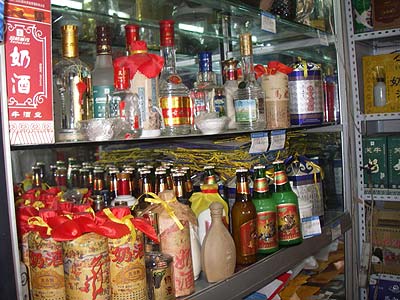
Out of necessity Mongolians have found creative and ingenious ways to use the milk of all five of the domestic animals in the country: sheep, cattle, goats, camels and horses. Orom is the cream that forms on top of boiled milk; it is highly prized and very delicious. Airag is fermented mare's milk; it's a potent but manageable wine. Nermel is a kind of home-brewed milk vodka that resembles Chinese baijiu, very strong stuff. Tarag (Chinese suan nai) is yogurt. Shar tos is a kind of ghee made from curds and orom; it is sold in little glass jars labeled as "hwang yo" -- yellow oil. Today many delicious varieties of dairy products are produced exclusively in Inner Mongolia at the Mengniu milk factory. In some small home style cafes diners can find tsagaan tos, a Mongolian porridge consisting of boiled cream mixed with flour and natural fruits and a dried cheese called eesgii. Finally, there's sgtai tse, or nai cha as the Chinese call Mongolian milk tea; slightly salty but refreshing, this beverage is now sold everywhere in dried form but of course it is best fresh.


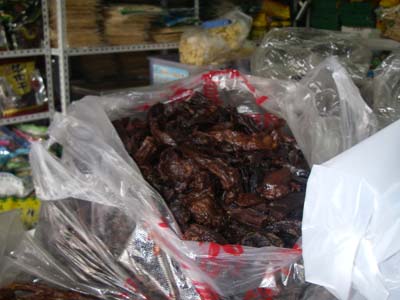
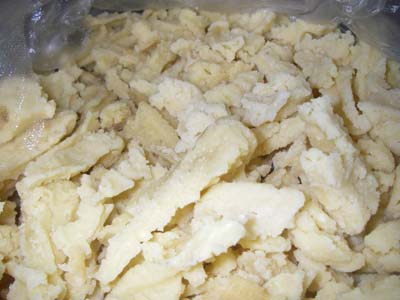
Dried dairy products are also plentiful throughout Inner Mongolia. Aaruul are dried curds. During the summer it can be seen baking in the sun on top of Mongolian yurts in the Hulun Buir grasslands in the far north. Eetsgii is a very hard, dried cheese. Around Hohhot the Mongolian food stores also sell tofu block sized pieces of cheese that somewhat resembles western cheese. It's pungent and easily crumbles; this is bislag. These unique dairy products are sold along with dried, seasoned jerky; Chinese: niu rou gar. Jerky is made from cow, horse and camel meat. Traditionally the Mongolians prepared dried foods to ensure survival during the long winter months, now factories produce these products for domestic and international consumption.


Grain and flour dishes:


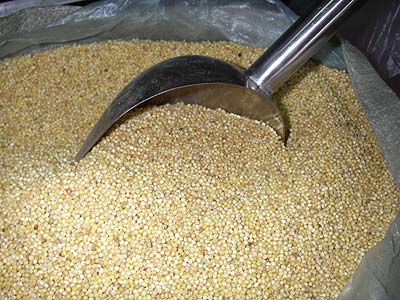
Inner Mongolian cuisine isn't just about meat and milk: Inner Mongolians also consume cereals, barley, potatoes, natural fruits and plants native to the countryside. Wheat, oats, buckwheat and millet are popular grains because these hardy plants grow on the steppes and flourish in this cold, continental climate. In Hohhot restaurants serve a very popular dish unique to this province called "yo mian" -- it is made from both oats and/or buckwheat flour, and served as a cold dish with cucumbers and sauce. In most restaurants one may also order "wu wu" -- the term for oat noodles rolled into little circles and cooked in a bamboo steamer. Noodles here come in diverse shapes, from shells to fettuccini. Potatoes also thrive in this chilly climate. Hohhot restaurants serve a tasty cold dish made from cold mashed potatoes mixed with baby wild onions.


Barley porridge can be eaten for breakfast or lunch but traditionally Mongolians have uremtei khool: toasted millet mixed with yogurt and/or sour cream, and then sprinkled with sugar.


Shar Bing: A large round flour pancake stuffed with minced meat seasoned with garlic or onion (it can be anything from mutton to beef to camel to horse) and fried on a grill.


Bansh: A dumpling like delicacy, mixed with minced meat and onions or, it is covered with flour and steamed in boiling water. It can also be fried in oil. This is very similar to the Chinese jiaozi but much meatier.


Huo guo: Mongolian hot pot


Hot pot is known around China and the world. Fast, fun and healthy, diners sit around a boiling cauldron of broth divided into two parts: a bland soup and a spicy soup. Guests select from dozens of foods: ranging from shaved lamb to chunks of fish, sliced root vegetables and leafy greens, exotic innards, tofu and animal parts. Everyone chooses something to add to the pot. The food quickly cooks and diners enjoy reaching into the communal cauldron to retrieve a delicious morsel. It is not hard to imagine nomads on the steppe boiling up their dinner among friends as the stars flicker gaily above them.


Eating out:


Mongolian restaurants crowd against each other along densely populated side streets. To find them simply follow the aroma of lamb wafting through the air. If you want a truly luxurious dining experience, complete with Mongolian artifacts and a table in an authentic Mengggubao (yurt) the Bai Yin Khor Va restaurant is not to be missed. Bon appetite!


(China.org.cn by Valerie Sartor, July 23, 2007)

Tools: Save | Print | E-mail | Most Read

Related Stories

Product Directory
China Search
Country Search
Hot Buys
SiteMap | About Us | RSS | Newsletter | Feedback
SEARCH THIS SITE
Copyright ? China.org.cn. All Rights Reserved E-mail: webmaster@china.org.cn Tel: 86-10-88828000 京ICP證 040089號
国内精品一区二区三区最新_不卡一区二区在线_另类重口100页在线播放_精品中文字幕一区在线
欧美疯狂性受xxxxx喷水图片| 欧美日韩视频一区二区| 国产乱码精品一区二区三| 久国产精品韩国三级视频| 美女被吸乳得到大胸91| 国产麻豆精品95视频| 高清久久久久久| 97精品视频在线观看自产线路二 | 精品国产网站在线观看| 久久老女人爱爱| 国产精品乱码一区二区三区软件 | 26uuu国产日韩综合| 亚洲视频一区二区在线| 亚洲福利一区二区三区| 久久电影网站中文字幕| 成人av在线网站| 欧美日韩精品一区二区天天拍小说| 日韩欧美视频在线| 中文子幕无线码一区tr| 婷婷国产在线综合| 大尺度一区二区| 777xxx欧美| 国产精品久久久久久久蜜臀| 亚洲狠狠丁香婷婷综合久久久| 免费成人在线观看视频| 从欧美一区二区三区| 欧美精品少妇一区二区三区| 久久久国产午夜精品| 亚洲综合免费观看高清完整版| 蜜桃久久久久久| 色综合久久天天综合网| 欧美v亚洲v综合ⅴ国产v| 亚洲男人的天堂av| 国产主播一区二区| 欧美亚洲国产一区二区三区| 国产亲近乱来精品视频| 全国精品久久少妇| 91麻豆高清视频| 久久午夜羞羞影院免费观看| 亚洲在线免费播放| 成人a区在线观看| 日韩精品一区二区三区在线| 亚洲精品国产成人久久av盗摄| 韩国精品主播一区二区在线观看 | 国产一区视频在线看| 在线不卡免费欧美| 亚洲精品免费播放| 成人av在线看| 国产精品婷婷午夜在线观看| 蜜臀久久久99精品久久久久久| 一本到三区不卡视频| 久久久亚洲精品一区二区三区| 日韩精品成人一区二区在线| 色av成人天堂桃色av| 日韩美女视频一区| 成人av网站免费观看| 国产日韩精品视频一区| 激情五月婷婷综合| 久久这里只有精品首页| 久久国产成人午夜av影院| 欧美精品xxxxbbbb| 午夜电影久久久| 欧美色成人综合| 亚洲午夜激情网页| 欧美午夜在线一二页| 亚洲中国最大av网站| 91豆麻精品91久久久久久| 一区二区三区鲁丝不卡| 欧美在线免费观看亚洲| 亚洲一本大道在线| 欧美精选午夜久久久乱码6080| 亚洲国产综合在线| 91麻豆精品国产91久久久| 青草av.久久免费一区| 日韩色在线观看| 国产裸体歌舞团一区二区| 久久久五月婷婷| 成人av网站在线| 亚洲综合在线五月| 在线成人高清不卡| 国产一区二区三区国产| 国产精品三级久久久久三级| 91视频观看免费| 亚洲18女电影在线观看| 91精品国产综合久久国产大片| 捆绑紧缚一区二区三区视频| 久久久久久久久久美女| 91色在线porny| 图片区小说区区亚洲影院| www精品美女久久久tv| 不卡在线观看av| 午夜精品一区在线观看| 久久久久久免费网| 色呦呦国产精品| 日韩av一区二区三区四区| 国产欧美一二三区| 欧美日韩午夜影院| 激情六月婷婷久久| 亚洲另类在线一区| 精品免费视频.| 一本到一区二区三区| 免费成人你懂的| 国产精品高潮呻吟久久| 欧美精品1区2区3区| 成人性色生活片| 亚洲第一福利一区| 中文无字幕一区二区三区| 欧美性一二三区| 国产成人综合在线| 天天操天天色综合| 国产精品久99| 精品免费国产二区三区| 在线免费观看成人短视频| 国产乱国产乱300精品| 一区二区三区不卡视频 | 亚洲福利视频导航| 国产精品久久久久一区二区三区共| 欧美区在线观看| 一本久久a久久免费精品不卡| 国产 日韩 欧美大片| 六月丁香婷婷色狠狠久久| 一区二区三区不卡在线观看| 中国色在线观看另类| www精品美女久久久tv| 欧美一级久久久| 欧美浪妇xxxx高跟鞋交| 欧美专区亚洲专区| 91麻豆免费看| eeuss影院一区二区三区| 国产精品综合在线视频| 九九在线精品视频| 热久久免费视频| 热久久久久久久| 日韩成人午夜精品| 亚洲18色成人| 天天免费综合色| 婷婷久久综合九色综合伊人色| 亚洲精品ww久久久久久p站| 亚洲日本在线看| 国产精品久久久久久久久免费相片| 久久精品一区四区| 国产亚洲欧美一区在线观看| 精品少妇一区二区三区日产乱码 | 高清免费成人av| 不卡视频一二三四| av福利精品导航| av在线综合网| 欧美在线一区二区三区| 欧美日韩一区在线| 91麻豆精品国产91久久久久久久久 | 亚洲六月丁香色婷婷综合久久| 亚洲视频一区在线| 亚洲第一搞黄网站| 奇米色一区二区三区四区| 久久精品国产一区二区三 | av网站免费线看精品| 色8久久人人97超碰香蕉987| 欧美日韩精品综合在线| 日韩一级在线观看| 国产人成一区二区三区影院| 国产精品国产三级国产普通话99 | 欧美成人三级电影在线| 久久久久久久久免费| 国产精品久久久久久久岛一牛影视 | 99精品视频在线免费观看| 色婷婷激情综合| 91麻豆精品国产91久久久久 | 亚洲综合一区二区精品导航| 日本免费新一区视频| 国产高清亚洲一区| 欧美色偷偷大香| 精品国产一区二区三区久久影院| 国产精品青草久久| 亚洲h在线观看| 国产成人精品午夜视频免费| 色综合色综合色综合| 日韩你懂的电影在线观看| 国产精品高潮呻吟久久| 日本一不卡视频| av中文字幕不卡| 精品欧美一区二区久久| 一区二区三区在线播放| 毛片av中文字幕一区二区| 99久久精品国产观看| 日韩一卡二卡三卡四卡| 伊人婷婷欧美激情| 国产一区二区三区免费| 欧美日韩在线精品一区二区三区激情| 久久一夜天堂av一区二区三区 | 国产麻豆一精品一av一免费| 欧美日韩一区二区三区高清| 国产欧美日韩麻豆91| 日本aⅴ亚洲精品中文乱码| 日本久久电影网| 国产欧美综合在线| 韩国中文字幕2020精品| 欧美日韩一区二区三区四区| 亚洲日本在线a| 成人黄色av网站在线| 精品裸体舞一区二区三区|