With a long history of overseas emigration, the Wenzhou people in east China's Zhejiang Province have built distinctive communities in Chinatowns around the world. They are especially noted for having an astute business sense that allows them to quickly grasp and benefit from commercial opportunities.
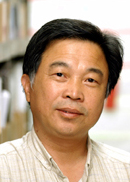
Yang Huanming, chief scientist of China's human genome project and the director of Beijing Genomics Institute, Chinese Academy of Sciences (CAS), is a Wenzhou-ese. Yet he has applied his sharpness to scale heights in the field of sciences rather than business.
After leading his team of researchers to help complete the global Human Genome Project (HGP), he and his colleagues have started exploring the 0.01 percent variations between different individual's human DNA.
Where such variations in DNA sequences occur on the same chromosome and are inherited in blocks, they are known as "haplotypes." Studying these may give scientists more information to understand and treat diseases.
With his current renown, Yang is confident about setting new research goals for his team.
But he will not forget his work's difficult beginnings, when he had to dig into his own pocket to fuel his research. It was largely due to the individual efforts of Yang and his colleagues that China was able to join the global HGP as the only developing country member.
"It took me quite a lot of effort to persuade other countries to accept China and Chinese leaders to accept HGP," recalls Yang, sitting peacefully in his small office in an old industrial building in an eastern suburb of Beijing.
Humble beginnings, high targets
Born into a rural family in 1952 in Leqing City of Zhejiang Province, then a county affiliated to Wenzhou, Yang did not have a brilliant start.
Aged 22, he enrolled at Hangzhou University. Five years later, in 1979, Yang began his postgraduate study at Nanjing Railway Medical College. He stayed on there as a lecturer after graduation.
In 1984, Yang passed a highly competitive exam and won a government schoarship to study for a doctoral degree in genetics at the University of Copenhagen in Denmark.
Four years later, after obtaining his doctorate, he continued his academic career at INSERM-CNRS Immunology Center in France, before continuing at Harvard medical school and the University of California at Los Angeles in the United States.
After ten years abroad, Yang returned to China. In 1994, he became a research fellow at the Chinese Academy of Medical Sciences. He started work in the latest scientific frontier: human genome research. In the initial period, Yang had to do some very basic genetic researches.
Yang had witnessed the boom in human genome first-hand while overseas.
In 1989, the US Congress allotted US$3 billion to support an international human genome project, aimed at sequencing all human genes within 15 years. By the mid 1990s, the United Kingdom, Germany, France and Japan had joined the project one by one.
The human genome project is so significant, both for scientific research and for human life that China should not sit idly by and let it done by others, Yang said.
A gene, consisting of certain combinations of the four types of nucleotide acids (indicated as A, T, C and G), is the basic unit of the genetic information of life. It transfers genetic information by deciding the formation of a certain type of protein.
The complete sequence of the human genome comprises some 60,000 to 100,000 genes, which contain the human body's complete genetic information.
To "sequence" the human genome, means to array all the combinations of the four types of nucleotide acids in human cells.
Although in the past years, people's understanding of individual genes have been improved greatly, they also know, in most occasions, genes do not play a certain role such as curbing the spread of cancer themselves. They work together to achieve a certain function collectively.
"When we have a general picture of the human genome, the study on the functions of individual gene as well as their dysfunctions will become much clearer," Yang said.
Once the individual and collective functions of the genomes are known, medicine may be able to correct many genetic diseases or diseases related to the mutation of genes, such as cancer, Yang wrote in his popular science book Deciphering Human Secrets.
In China, the first research into the human genome was done sporadically. A Chinese coordination office of human genome studies was established at Peking University in 1992. Two informal human genome research centers were set up in Beijing and Shanghai.
Chinese scientists were initially limited to becoming a partner of the global project, catching up with the latest research, or, at most joining the project at an individual level.
"No one imagined China could become a major player in the sophisticated and costly international human genome project," Yang says. "The human genome project as a whole was considered developed countries' business."
But he did not agree.
"It was not a question of capability but of willingness. If we joined the project, our (genome sequencing) capacity could be naturally improved," Yang said.
He believed that the HGP needed a member from developing country. "This project was branded as a historical milestone in deciphering human genetic secrets. Without the participation of the world's most populous country, it was incomplete," Yang said.
Meanwhile, the global project came under increasing ethical, financial and commercial pressures.
Conservatives lobbied the US Congress not to support the HGP as it might result in human gene prejudice. As the HGP promised to freely publish all sequencing results, many profit-oriented companies were reluctant to cooperate with HGP.
"This was a good chance for China to join, as the HGP needed the support from the world's largest developing country," Yang said.
So Yang and Yu Jun, then a leading scientist at the University of Washington and now deputy director of Beijing Genomics Institute, joined the Institute of Genetics and Developmental Biology (IGDB), CAS in 1998.
Supported by CAS and IGDB leaders, Yang formed the Human Genome Centre under IGDB and began preparing to apply to participate in the global HGP.
He dug out all his personal savings, about US$70,000, and persuaded his colleagues and staff to lend their personal money as well. The center raised about 4.2 million yuan (US$507,246) from these donations. Meanwhile, Yang obtained several million yuan from CAS president funds, enabling the center to buy the first batch of sequencers.
After hearing of his ambitious dream of making China the world's leading genome sequencing player, Lu Guangzhou, then mayor of his hometown Leqing City, agreed to donate 11 million yuan (US$1.33 million) to Yang's centre.
Yang also managed to raise several million yuan from other sources. And he travelled frequently to persuade other scientists and institutes to join the human genome project.
In September 1999, the HGP committee decided at a London meeting that China could assume responsibility for one percent of the total genome sequencing. China was allotted to decipher the chromosomes that make human forearms.
Yang's international success helped him win the support of the government. In November, the Ministry of Science and Technology officially agreed to fully support the Chinese HGP team. One month later, the first batch of government funding arrived at the centre.
In April 2000, just six months after they started, Chinese scientists finished mapping the draft of the genes for human forearms.
In June 2000, the 16 HGP genome centres in the United States, Britain, Germany, Japan, France and China, announced the completion of "the human genome draft."
In April 2003, Chinese leaders, together with their counterparts in the United States, Germany, France, United Kingdom and Japan, declared the history-making Human Genome Project was completed, with 99 percent of human genes having been sequenced.
Post-human genome
Despite the speedy progress of genome research, however, scientists now believe that the breakthrough in sequencing human genome does not offer enough vital information regarding human health. Although the gene map is complete, only the functions of about 10 percent of genes are known.
To understand these functions, researchers have launched an international human proteomics project. It studies the proteins, which realize the genes' purposes.
Yang says the human genome sequence has played an important, if little-known, role in understanding our genetic secrets.
"Now, studies on the functions of individual genes and proteins are based on a solid and comprehensive foundation," he says. "In addition, the big science projects like human genome project have helped train scientists to keep up with the newest international development in life sciences."
After the draft of human genome was sequenced, Yang led his team to unveil the draft of the genome sequence of indica, the most widely cultivated subspecies of rice in China and other Asian regions, with the cooperation of other institutes.
Since then, scientists at Yang's institute have mapped the genome sequences of pig, chicken and silkworm.
Now, by searching for the 0.01 percent of human DNA variants, scientists hope that by creating a haplotype map known as a "HapMap" of the human genome, they will better understand how genetic variations affect an individual's health. With more research, the risks of diseases such as asthma, cancer, diabetes and heart diseases could be greatly lessened.
(China Daily September 2, 2005)