Two months ago, China's State Food and Drug Administration (SFDA) issued its approval allowing Shenzhen-based SiBiono Gene Technology Co Ltd to produce its gene therapy medication.
The SFDA's approval enables SiBiono to become the first company in the world to produce a licensed gene therapy medication.
And SFDA's decision followed its own authorization last October, of the official license granted to the same company to conduct clinical gene therapy trials in China.
The official approval has given Peng Zhaohui, 55, chairman and CEO of Shenzhen SiBiono Gene Technology Co Ltd, and his colleagues additional confidence in their pursuit for better remedies for illnesses that harm and kill a lot of people every year.
"Although we have developed the world's first commercial gene therapy medicine, there are still a lot of things unknown in the field," said Peng.
"But we have the confidence to work on and unravel more of the mysteries," he said.
Road to Gendicine
Peng began to learn about gene therapy during his doctoral studies in Japan in the late 1980s.
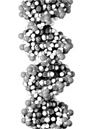
Genes are the basic physical and functional units of heredity and they are carried on chromosomes.
Genes have specific sequences of bases that encode instructions on how to make proteins, which perform most life functions and even make up the majority of cellular structures.
Genetic disorders result when genes are altered and encoded proteins are unable to carry out their normal functions.
Researchers began to look into gene therapy in the late 1980s to develop techniques for correcting defective genes responsible for disease development.
For instance, they believe they can use new genes to stall the gene expression of defective target cells, such as cancer cells, and hence curb their natural reproduction.
After finishing his doctoral program, Peng chaired a biological chemistry lab in Guangzhou, in South China's Guangdong Province, and led a research team into the vast, unknown but promising ocean of gene therapy.
Gene therapy theory and practice were widely proposed in the United States and Western Europe, and limited clinical trials started in the early 1990s. In China, Peng and other researchers scoured current medical literature to explore the pioneering field.
Theoretical fruits came first. In 1994 he published China's first book on gene therapy.
Yet in practice his team was frustrated again and again. "Although we had a sufficient grasp of the theories, we did not have a good grasp of the processing techniques," he recalled. "Our preparation was not yet adequate."
He pointed out that placing more importance on theories and not paying enough attention to processing techniques and quality control is a common shortcoming among Chinese biological researchers.
But Peng and his colleagues did not give up.
"More than 50 percent of major human diseases are believed to be linked to decaying or disordered human genes. I believe gene therapy will definitely play a leading role in medical science in China in the future," Peng said.
In 1994 he went to do further research in the United States. There Peng furthered his understanding of biological processing and quality control techniques.
But conducting research in the United States was not enough for Peng, because there he could not start work on what he wanted to do most - develop a gene therapy medicine.
In late 1997, Peng returned China and soon established his SiBiono Company to develop his gene therapy medicine - Recombinant Ad-p53 Anti-cancer Injection, later registered as Gendicine.
"We were all touched by Peng's enthusiasm and his devotion to developing gene therapy. As a result, our local government decided to support his program as much as possible," said Zhou Hui, deputy director of the Bureau of Science and Technology of Shenzhen's Nanshan District.
SiBiono is located in Shenzhen's Nanshan High-tech Zone.
Gendicine uses an adenoviral vector to carry p53 tumor suppressor genes to tumor cells. It is widely believed that P53 is the most powerful gene known to curb the genetic expression of tumor cells.
By the time Peng established SiBiono, more than 600 gene therapy plans had been launched in the United States, Europe and Japan.
But the research involved was tortuous.
In the United States, the clinical trial of a leading gene therapy product was suspended in 2000, because of its strong side effects. Progress in Europe has also been slow and has experienced similar setbacks.
Well aware of the difficulties, Peng and his colleagues continued their work.
They started with the careful choice of what they thought would be the right vector, proper target diseases and careful dosages of the injection.
They chose head and neck squamous cell carcinoma, the second most common skin cancer after basal cell carcinoma, for the test. Of the 2.5 million Chinese diagnosed with cancer every year, about 250,000 have squamous cell cancer.
The low clinical costs in China meant that SiBiono could conduct more than five years of clinical trials without facing any serious financial problems.
In the United States, the average cost incurred per patient during clinical trials is about US$50,000. Peng said that Gendicine's trials cost only a tiny portion of that sum.
Government support was another advantage for Gendicine.
Peng estimates the total investment in Gendicine at about 80 million yuan (US$9.66 million), one fourth of which came from various government sources, including The Ministry of Science and Technology, the 863 program - a State high-tech fund, and the Shenzhen municipal government.
Investors from China's Tsinghua University-affiliated enterprises have consistently supported the Gendicine program.
"Yet without Peng's persistence, all the advantages would not have played their due role," said Zhou, who has been close to Peng's program since its beginning.
Deep roots
Peng's determined resolve and his diligence have deep roots.
Peng obtained his preliminary medical knowledge in a one-year training class in his rural hometown in Northwest China's Shaanxi Province at the age of 14.
The class ended with the beginning of the "cultural revolution" (1966-76), but Peng had to look after the pharmacy of a rural hospital because all the regular doctors and apothecaries were forced to stop their daily work and get involved in the political movement. Some of them were even persecuted.
"At that time I had to study medical texts night after night to deal with the work in the pharmacy. I even developed some special remedies to ease my patients' medical problems," Peng said.
In 1970, Peng joined the army, serving on the Qinghai-Tibet Plateau. As a result of his good work, he was recommended for study in a Guangzhou-based medical college two years later.
"In such a harsh environment as that of the plateau, one could only do two things: struggle to survive in the harsh natural environment and try to help others survive," Peng said. "That's why I insisted on developing Gendicine no matter how many difficulties we met."
In 1998, Peng and his team prepared a 1,000-page Chinese report and a 1,300-page English version of it to apply for the clinical trial of the gene therapy medicine.
Their hard work amazed the experts with the then State Drug Administration (SDA), which became the State Food and Drug Administration in 2003.
The SDA approval for clinical trial was issued, but some hospitals and doctors were reluctant to help Peng carry out the clinical trial of the drug.
It was indeed risky.
Peng and his colleagues worked hard to persuade hospitals and doctors one by one.
Peng and the other doctors leading the clinical trial discussed each treatment plan to ensure the patients' safety.
The ceaseless efforts paid off.
The clinical trial showed that after eight weeks of therapy involving one injection per week, 64 percent of patients' tumors saw complete regression and 32 percent experienced partial regression.
A total of 107 patients are involved in clinical trial II, and the statistics are based on clinical trial II's data. A third clinical trial is no longer required by the SFDA.
In combination with chemo- and radiotherapy, Gendicine improved treatment efficacy more than 3-fold, according to Professor Zhang Shanwen of Beijing Cancer Hospital, affiliated with Peking University, who chairs Gendicine's clinical trial II.
But Peng had another challenge to face.
Industry insiders say that in practice, the SFDA routinely does not approve any new kind of medicine if a medicine of that kind has not already been authorized by the US Food and Drug Administration.
"Our strategy of choosing a type of squamous, or skin, cancer as a target disease has helped," Peng said.
The large proportion of skin cancer patients in China has made it easier for the drug authorities to make the decision.
"While one significance of Gendicine is its ability to save thousands of lives, another significance of the drug is that it has proven that we are not behind the rest of the world and that we can become a world leader if we work hard enough," Peng said.
(China Daily March 23, 2004)