Strong leadership necessary to avoid 'middle income' trap
- By Zheng Yongnian
 0 Comment(s)
 Print
Print E-mail China.org.cn, December 12, 2012


China's economic growth has slowed since the beginning of this year. How should we approach this slowdown? Generally, there are three points of view.
|
|
|
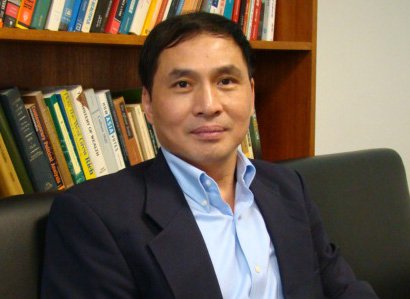
Zheng Yongnian, director of the East Asian Institute of the National University of Singapore [File photo] |
Optimists believe that China can still maintain a high level of growth in the long run. On the other hand, pessimists are saying the Chinese economy is entering into a low-growth period earlier than it should. Some ideologically-minded people even think that country's economy could collapse. However, most people share a common view that Chinese economy is entering a medium-growth period.
From a historical perspective, there has never been an economic entity that could indefinitely maintain a high level of economic growth. Generally, as economies transform to a high level of development and expand their economic scale, the speed of growth shifts from high to medium and then to low; this is an inherent law of economics. China's case is no exception. However, whether or not that transition is handled well will be the decisive factor in determining whether the country can achieve sustainable development.
From China's perspective, sustainable economic development is the key to its national development. This sustainability will determine whether China can raise its per capita income from a medium to high level. If China can achieve moderate economic growth in the coming twenty years, it will eventually achieve this high-income status.
However, it will not be easy to bring the country up to a high level in terms of per capita income. According to the World Bank, only ten plus developing countries have successfully become high-income countries since the end of the World War II, while most of the others have stagnated at middle-income levels.
Maintaining a moderate pace of growth will be especially important for China's social development: it will create sufficient employment opportunity, help maintain steady increases in wages, and help bring more of the country into the middle class. A society with a large middle class is the most effective guarantee for social stability. China faces a severe challenge in this regard; with thus far insufficient employment opportunity, slow growth in wages and a relatively small middle class. If this situation continues, a sudden slowdown in economic growth could bring about endless social problems and even political problems. If a medium economic growth can be achieved in the long run, many problems can be solved while stable development continues.
Achieving inclusive growth
For many years, China's economy has grown rapidly, but at a serious social cost. That is, the higher the speed of development and the more unfair the distribution of income, the more polarized and unstable society has become.
Politically, sustainable economic development is the economic basis for China's future political reform. A country's economic structure defines its social structure, which in turn shapes its political structure. Obviously, it is extremely difficult for a country to accomplish democratic reforms without a solid economic and social structure. If sustainable economic development can allow China to grow a sizable enough middle class, a further push for democracy will not be difficult to achieve.
To achieve sustainable moderate economic growth in the coming twenty years, some basic questions must be asked: how was China's rapid economic growth achieved? What has been done? In what sectors was it over done? In what sectors was it done insufficiently? Are there any new sectors to enter into?
By answering these questions, we will be able to more clearly see the current situation of China's economic development as well as its future direction. More importantly, we will better understand how the problems China faces came into being, and what reforms are necessary to manage and solve these problems and prevent problems from reoccurring.
An even more important question is: who will be doing this? Many people believe China is capable of escaping the medium-income trap to achieve high-income society status. But China needs reform to bring its capabilities into full play. Only with reforms can China avoid a difficult stagnation or worse.
By looking at an example in Chinese history from Ming Dynasty (1368-1644), which was the beginning of maritime history, we can see further the urgent need for reform. China at that time had the great potential of becoming a world maritime power. The "Grand Voyages of Zheng He" was an evidence of technological capability of the Ming government. But why did this potential remain latent? Basically, there were two reasons. First is the government's political ideology. Becoming a maritime power had never been part of the political ideology of the Ming government, which had been built on agriculture. Second is vested interests - various interest groups were afraid that an ocean-based economy could damage the existing system, which benefit them financially. The combination of these two reasons prevented China from becoming a global maritime power.
Historically, for other countries that have been "trapped in medium income," it was the same - political factors hindered their continuing development and rise. Some Asian countries are good examples. In the 1960s, Thailand and the Philippines achieved robust economic development. They were regarded as the future of Asia. However, before long, these countries fell into the "medium-income trap", and were not able to continue a strong pace of growth since then.
Why did this happen? For the same reasons: ideology and vested interests. They imported Western-style democracy too early. Before they were able to make their economic pies bigger, election politics often evolved into pie-dividing politics. There was no political force that was strong enough to make an effective government to push the development of the society and the economy. Instead, various interests all scrambled for relatively small pieces of the pie. This has lead to furious internal disputes, and in some cases, violent riots.
As history has shown, "prima facie" democracy has become an effective tool for vested interests to maintain their benefits. When people accept this ideology and when the vested interests maintain their benefits via the form of democracy, meaningful political change becomes impossible. Therefore, in certain societies that tried to adopt a Western system too soon, their unfortunate situation of being caught in the "medium-income trap" has been a result of their political systems' premature acceptance of "low-level democracy".
Political steps for China
Now, back to the question at the beginning of this article: Can China smoothly transit from a medium per capita income level to high-income status? Many scholars and observers have already pointed out their optimism in this regard. However, the key here is not economy but politics. With effective political development, it will be possible for China to enter the high-income bracket in the coming twenty years. But if it suffers political setbacks, China could fall into the "medium-income trap" like other countries in the region have done.
There is reason for the Chinese people to worry about this. Over the past several years, China has been suffering from weak political leadership. The ruling party is seeing a great number of vested interest groups inside itself, which aim to divide the existing pie instead of making the pie bigger. Even if the pie grows larger, these interest groups want to claim more of the pie for themselves.
Strictly speaking, the Communist Party of China now has many ideologies, not just one. Although the Party theoretically maintains democratic principles within itself, various interest groups comprise the intraparty democracy, while national politics is manipulated from behind the scenes. These interest groups tend to stick to their own respective ideologies. Each vested interest group attempts to make its own ideology the official party line. If this situation continues, it is very possible that China will once again decline before it will rise further, like what happened during the Ming Dynasty.
In terms of China's political future, the 18th National Congress of the Communist Party of China is especially meaningful. Whether China can transition from short-term-oriented, fast-paced growth to long-term medium growth, and from medium income to high income status, depends on a strong and powerful leadership to keep vested interest groups in check and push for sustainable development. The country is waiting to see whether its newly elected leaders are up to this arduous task.
The author is director of the East Asian Institute of the National University of Singapore.
(This article was first published in Chinese and translated by Li Bin.)
Opinion articles reflect the views of their authors, not necessarily those of China.org.cn.


